San Francisco 2018: A Tech Pilgrimage to the Valley - Foresight.ai TechCrunch's 2018 Winner - a Notion of 2018! LLMs had just been invented in 2018
Updated 30 May 2026 on LinkedIn
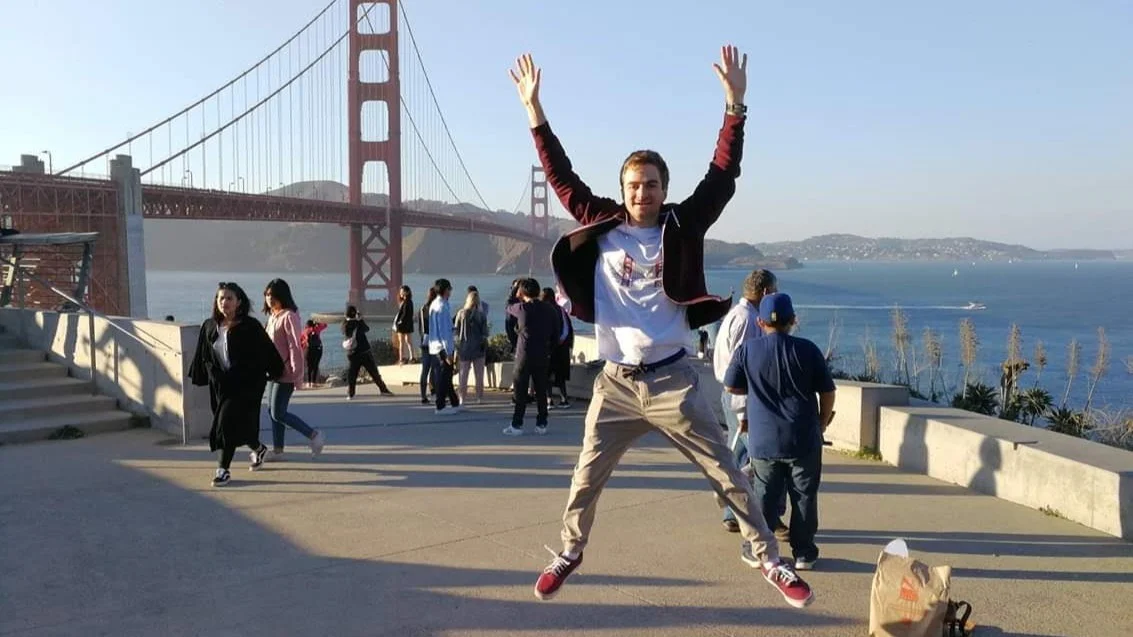
In 2018 after missing a work trip in 2015/6, I planned a personal but also business related trip to San Francisco that felt less like a holiday and more like a pilgrimage, and oh boy was I thankful in spades especially as COVID-19 hit some parts of the world towards the end of 2019 and went super mainstream in 2020 onwards. The opportunity came via a free TechCrunch Disrupt volunteer ticket, I was a website volunteer, created a Python script to collate names from a CSV file and export to a HTML file, I had some added help of a friend at the time as well.
As someone working in tech in Australia, a remote island far far away from the centrepiece of tech action, this was a chance to step inside the places that had shaped the modern internet — the companies, conferences, and campuses I’d read about for years. It was energising, grounding, and at times surreal. I decided to stay there for 10 days, my only regret was not choosing a cheaper hotel with a deal that was offered for 8 days stay at about half the accomodation cost at Fisherman's Wharf and looked much cooler! I decided to stay in the Financial District which had basically not much night life and quiet streets at night but was just a stone's throw away from the Moscone Center where TC Disrupt 2018 was hosted. It was also my first time travelling alone overseas which was huge for me.
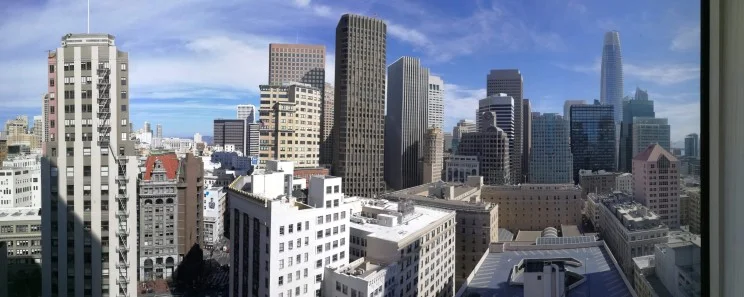
The biggest difference I had noticed driving from the airport to my hotel in San Francisco city center was that you'll see a lot of B2C company ads and even offices or warehouses .e.g Amazon just on the highway there. In Australia you wouldn't see such a high concentration of tech ads or business buildings. They're around but more as a remote or regional offices and most do not prominently display their logo outside buildings unlike in San Francisco or Palo Alto. A lot of office buildings in Sydney are owned by property companies, banks or insurance companies. In fact, a lot of the economy's money is funnelled through office real estate companies such as GPT, Multiplex, Meriton and more.
This trip wasn’t just about sightseeing. It was about context: seeing how technology, culture, and ambition intersect in the Bay Area.
By the way, here is the history of LLM evolution. https://www.geeksforgeeks.org/blogs/history-and-evolution-of-llms/#what-is-a-large-language-model-llm
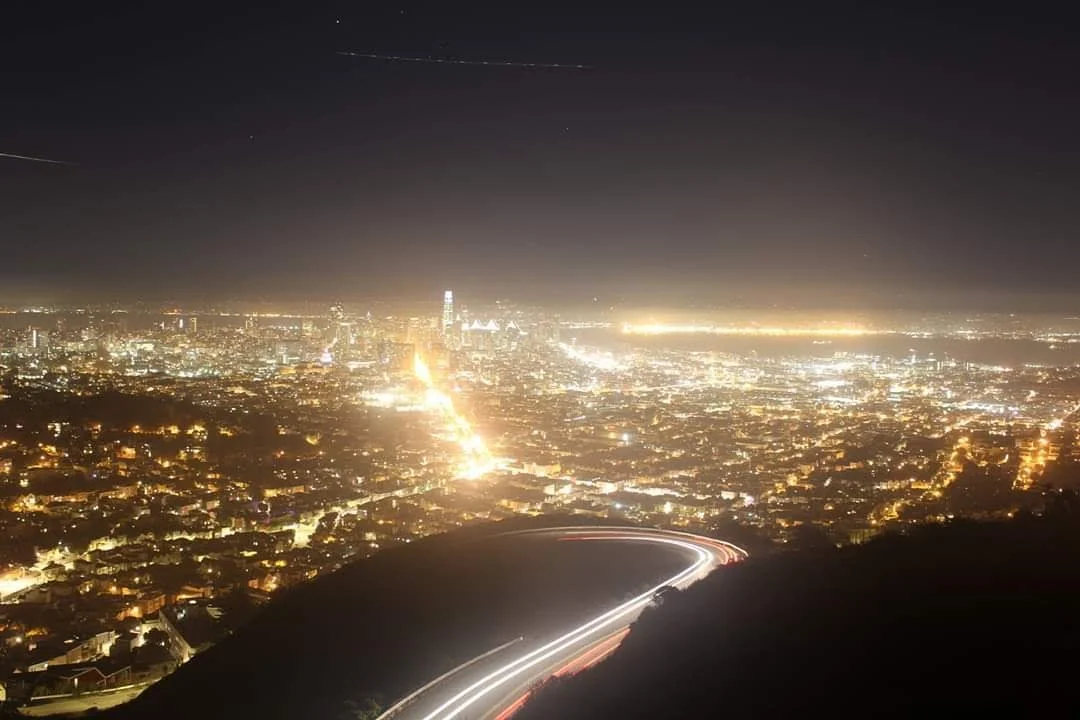
Twin Peaks at Night = Light trail of cars travelling down a mountain - I stayed here for 3 hours in the cold just to take as many shots as I could, I had to turn down 3-4 Ubers because it was so breathtaking
TechCrunch Disrupt: Ideas at Full Throttle
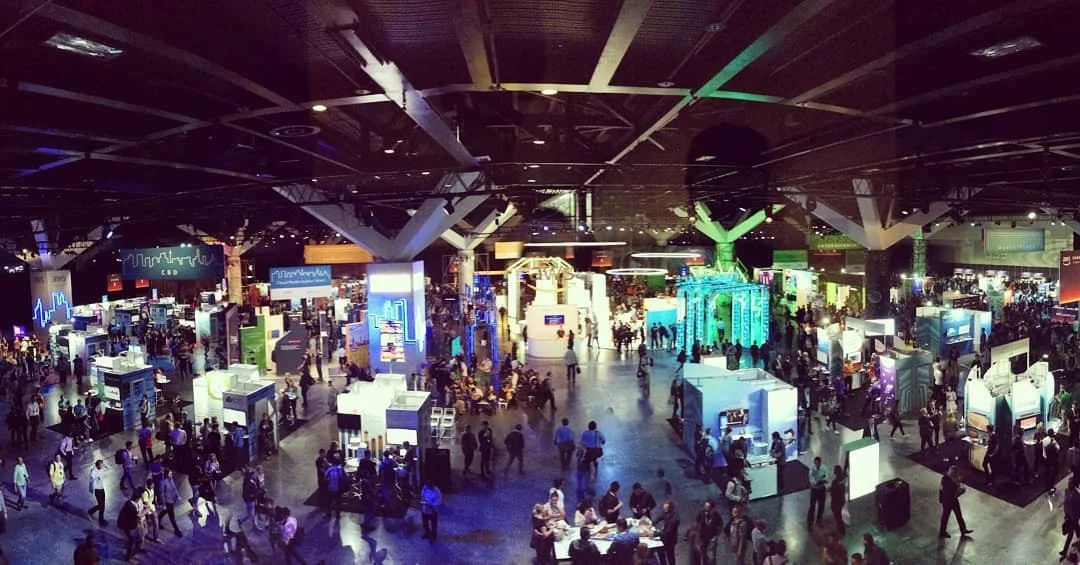
The centrepiece of the trip was TechCrunch Disrupt. If you’ve never been, imagine a dense concentration of founders, engineers, VCs, and journalists — all compressed into a few intense days.
What stood out most wasn’t just the startups on stage, but the pace. Everyone seemed to be moving fast: pitching, networking, iterating ideas in real time. You could feel how normalised risk-taking is in this ecosystem. Failure wasn’t something to hide — it was practically a credential. There was a refreshing directness to conversations. People didn’t ask if something was ambitious; they asked how fast it could scale and did it!
Exploring Google Headquarters in San Francisco [Googleplex Mountain View] (view original embed)
Google: Mountain View and the SF Offices
Visiting Google’s Mountain View campus was like stepping into a city designed by engineers. Bikes everywhere, open spaces, playful architecture — but also an unmistakable sense of scale. This wasn’t a scrappy startup anymore; it was infrastructure.
What struck me was how intentional the environment felt. Everything seemed optimised for long-term productivity: movement, collaboration, even downtime. It made me think about how physical space quietly shapes how we work.
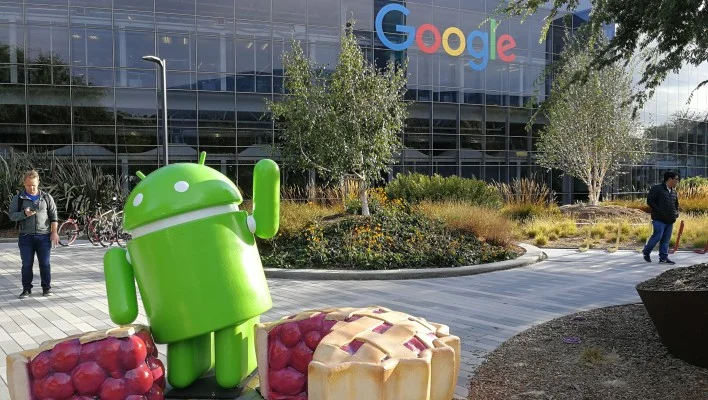
Google's Mountain View's Googleplex Campus - Android 9 Pie shown
The main Android version released in 2018 was Android 9 Pie (codenamed "P"), launched in August 2018, bringing features like gesture navigation, Digital Wellbeing, Adaptive Battery, and enhanced security, succeeding Android Oreo and paving the way for Android 10. A lighter version, Android Go (based on Pie), also emerged, targeting entry-level phones.
Key Features of Android 9 Pie (2018):
- Gesture Navigation: Replaced traditional buttons with swipes for a more modern look and feel.
- Digital Wellbeing: Tools to help users monitor and manage their phone usage.
- Adaptive Battery & Brightness: Used AI to optimize battery life and screen brightness based on user habits.
- Shush Feature: Automatically silenced notifications (Do Not Disturb) when the phone was placed face-down.
- Display Cutout Support: Better handling for notches and punch-hole cameras on edge-to-edge screens.
- The Google San Francisco office felt different — more urban, more compressed, but still distinctly Google. It reflected how big tech adapts its culture to different contexts while keeping a consistent internal identity.
A day in the life of a Google software engineer + campus tour
A day in the life of a Google software engineer + campus tour (view original embed)
If you're curious and bold enough, you can even catch a Google bus from Mountain View back to San Francisco. I spent most of my days commuting via Uber Pool which I don't recommend for longer haul trips although in hindsight seems it was one of the more beneficial methods. (Public transport in the US is not as nice as Australia's).
Google Bus from Googleplex To Mission (view original embed)
Meta (Facebook): The Social Graph Made Physical
The Meta (then Facebook) office was another reminder of scale — not just in headcount, but in influence. Walking through the space, it was impossible not to think about how many billions of people interact daily with products designed in buildings like this.
There was a strong emphasis on openness and collaboration, but also an undercurrent of intensity. This was a place where decisions ripple outward fast.
Apple Park, Cupertino: Precision and Restraint
Apple Park was perhaps the most striking visit — even from the outside. Minimalist, precise, and controlled, it felt less like a tech campus and more like a carefully engineered object.
Where other campuses leaned into playfulness, Apple leaned into restraint. Every detail felt deliberate. It mirrored Apple’s product philosophy perfectly: fewer things, done extremely well.
Recommended by LinkedIn
[
The Invisible Vault: How Family Offices Are Unlocking…
Dr. Marcus Tan 4 months ago
[
Cancel Everything
Walter DE BROUWER 6 years ago
](https://www.linkedin.com/pulse/cancel-everything-walter-a-de-brouwer)
[
Peak's 2025 End of Year Roundup
Peak EOR | B Corp™ 9 months ago
](https://www.linkedin.com/pulse/peaks-2025-end-year-roundup-peak-peo-szq6f)
It reinforced the idea that culture doesn’t just influence products — it is the product.
Computer History Museum : Perspective
The Computer History Museum in Mountain View was the quiet counterbalance to everything else. After days of talking about the future, this was a reminder of how recent — and fragile — our current tech moment really is.
Seeing the early machines, the prototypes, the dead ends, and forgotten companies was grounding. Many of today’s “inevitable” technologies once looked experimental or even absurd.
Progress, it turns out, is rarely linear. It's a must scene museum for any tech buff, I wish I had set aside more time to spend here, you'll definite need at least 1-2 hours of comfortable time to look inside.
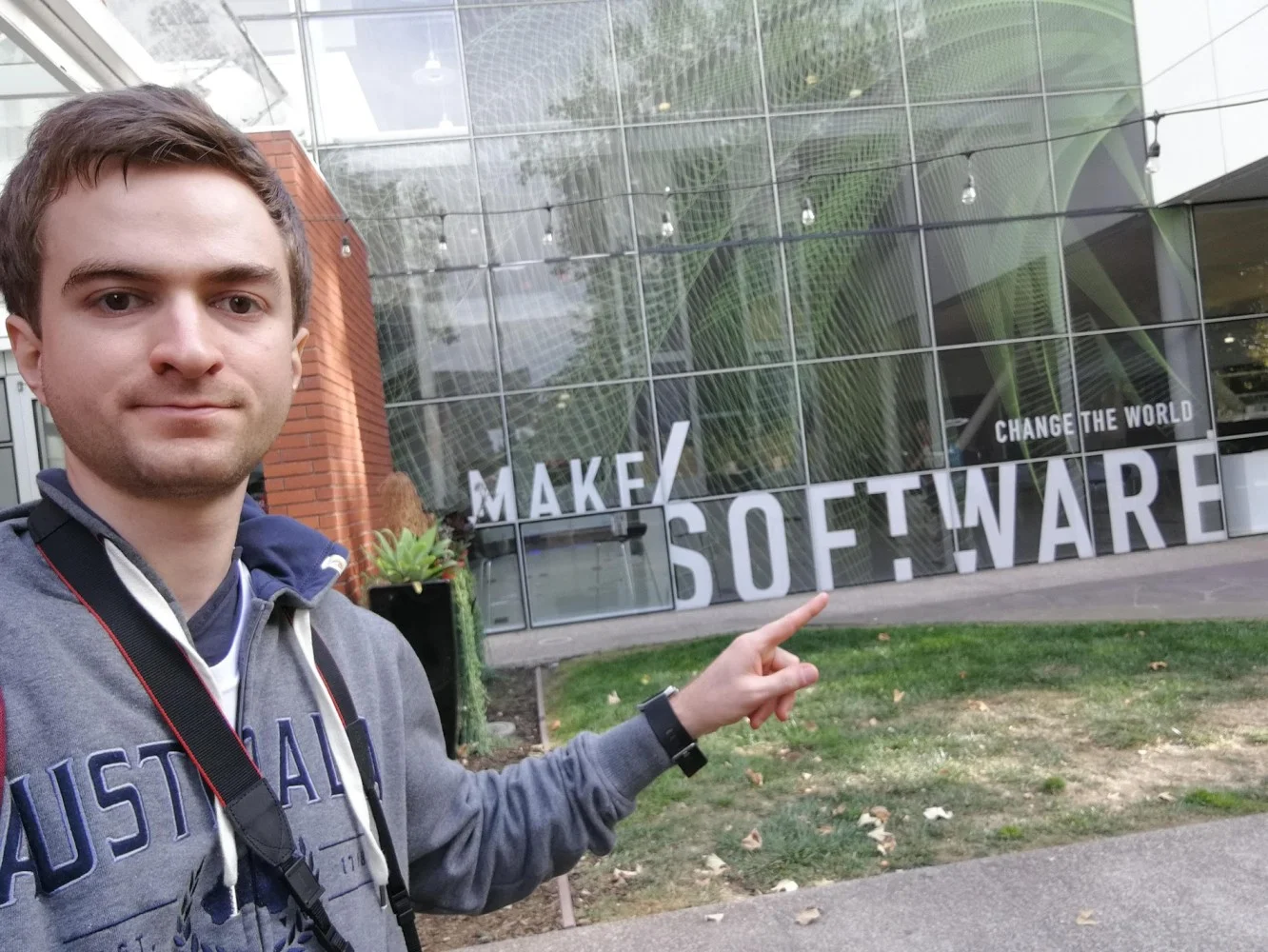
The motto at the Computer History Museum "Make Software - Change the world" I wonder if it's still the same in 2026 with LLM AI!
Some peaceful downtime with nature in one of, if not, the busiest tech city/ies in the world.
Amongst all the noise in San Francisco does lay some pretty blissful tourist but quieter spots like the Victorian Houses (aka Painted Ladies), Lombard St, Japanese Tea Garden (which I didn't do that time unfortunately!), Palace of Fine Arts, Twin Peaks (must see! It's as if you were looking out of an airplane and it's only a 20 min or so drive from the city center) and what stood out for me was the Hamon Towers, I don't even recall how I found the place but I am glad I visited!
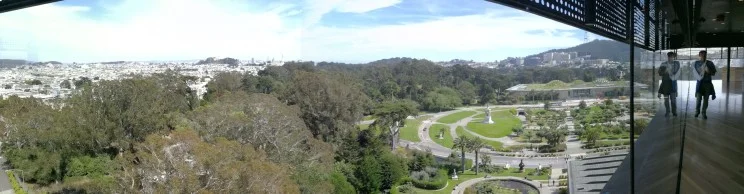
Hamon Tower deck
🏆 Forethought (similar to Notion or Brainfish )— Startup Battlefield Winner 2018
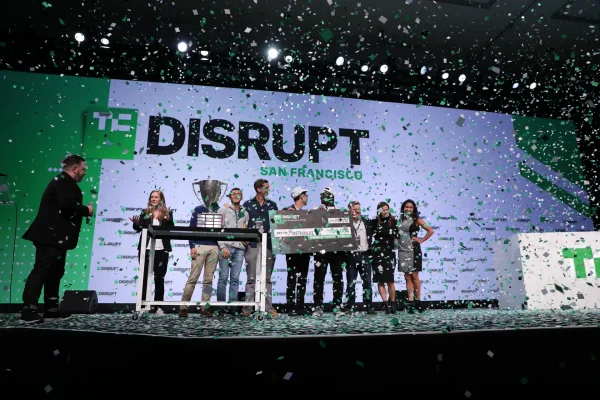
Forethought took out first place at TechCrunch's Disrupt 2018 - if you don't know this conference, you'll probably want to watch HBO's Silicon Valley, it's a highly prestigious startup event held yearly
Forethought took home the coveted Disrupt Cup and the $100,000 grand prize at Disrupt SF 2018 after competing against more than 20 early-stage startups selected for the flagship pitch contest.
Founded around the idea of revolutionising how people find and use information at work, Forethought built an AI-powered enterprise search system designed to help teams uncover the right contextually relevant content — faster, smarter and with significantly less noise than traditional search. Rather than relying only on keywords, Forethought’s technology applies modern machine learning to deliver results that actually understand user intent.
Their first major use case focused on customer support workflows — helping support teams instantly pull up the most useful answers from knowledge bases, tickets, documents and chat logs. The idea was to cut down the time support agents spend searching, and to make help desks far more efficient and accurate.
The judges — a panel of top investors and founders including Cyan Banister (Founders Fund), Roelof Botha (Sequoia Capital), Jeff Clavier (Uncork Capital), Kirsten Green (Forerunner Ventures), and Aileen Lee (Cowboy Ventures) — selected Forethought for how its AI approach could scale across organisations and transform how people work with information at scale.
🧠 Why Forethought’s Win Was Significant
- Ahead of the AI Curve – In 2018, AI-driven enterprise tools were just starting to gain serious investor interest. Forethought demonstrated a clear and practical use of AI that could save time and money for large teams.
- Broad Market Potential – While starting with customer support, the technology had obvious applications in knowledge work, sales, HR, legal, and other departments where finding the right information quickly is critical.
- Media and Investor Exposure – Winning the Disrupt Cup not only came with the cash prize but also huge visibility to tech media, founders and venture capitalists — a launchpad that has helped many Startup Battlefield alumni secure funding and scale.
What Stayed With Me
Looking back, this trip reshaped how I thought about technology careers and ecosystems:
- Environment matters — physical space, culture, networks and norms subtly but powerfully shape outcomes.
- Scale changes everything — what works at 10 people looks very different at 10,000.
- History is humbling — today’s breakthroughs sit on decades of experimentation and failure.
Most of all, the trip made tech feel more human. Behind every platform, campus, and keynote are people making trade-offs, bets, and imperfect decisions.
Would I go again?
For sure! Although I would like to go with more business intent next time, i.e. A work trip, startup pitching, meetup networking or joining an Accelerator. Y Combinator to name one. Change including lifestyle change is something I've grappled with my whole life. I've noticed some people seem to be able to just pickup and go from where they left off no matter their living arrangements or location, for me this would take a lot of planning, courage and determination of a higher priority to do. I've met some interesting people in Sydney like David Soul who worked in SF for 4 years as a sabbatical and returned to Sydney. He gave a talk in May 2018 at Lean Startup meetup "How to Land a Job in Silicon Valley – Tech Talk" which I must have found inspiring since I went to SF after that date.
San Francisco in 2018 wasn’t just a place I visited — it was a snapshot of an industry in motion. And I’m grateful I got to see it up close at least once in my life.
Until next time!
Warm regards,
Stefan C.
Cloud Engineer & Web Developer
Thanks for reading.
View the original discussion on LinkedIn ↗
Join the conversation
Comments and reactions use GitHub. Sign in to join in, and keep the discussion thoughtful and respectful.
View discussions on GitHub ↗