
In this article
Australia’s post-COVID career paradox
Over the past few years, I would estimate that about eight out of ten of my job interviews have been remote.
That is my own experience, not a statistic about the Australian labour market. And, generally, I prefer it.
I can focus on the conversation rather than organise a commute around it. An initial discussion does not need to become a half-day exercise in travel, waiting around and finding the right building.
But there is something about this arrangement that increasingly bothers me.
The interview happens online. The job may then require several days in the office. And the question hanging over everything is whether being physically present matters not just for doing the work, but for being noticed, trusted and considered for the next opportunity.
We have become comfortable with remote interviews. Have we become equally comfortable with remote careers?
A remote interview is not a preview of the workplace
A video interview tells me something about an employer’s recruitment process. It tells me much less about how the team actually works.
A scheduled call can be useful and still offer only a thin slice of a workplace. Once it ends, the interaction ends. That makes an opportunity to speak candidly with future colleagues more important, not less.
Who gets included in decisions? How does someone new build relationships? What happens when half the team is in a meeting room and the other half is on a screen? Does flexibility extend to career progression, or only to where someone completes their tasks?
To be fair, interviewing someone remotely does not prove that their entire job can be performed remotely. A one-hour conversation and an ongoing working relationship are different things. There can be good reasons for meeting customers, handling equipment, learning together or collaborating in person.
My concern is not that every online interview should lead to a fully remote role.
It is that candidates need a clearer picture of the workplace they are being invited to join. “Hybrid” should not be the end of that conversation. It should be the beginning.
Two or three office days is common, not universal
There is evidence behind the impression that several office days a week have become a familiar arrangement.
The Australian HR Institute’s 2025 report found that 30% of respondents to its attendance question reported a three-day minimum, while 16% reported two days. Another 28% had no minimum, although employees were encouraged to attend. Three days was the most common individual arrangement, not a rule followed by most Australian employers. Source: AHRI, 2025 report, pp. 4 and 8.
We should also be careful not to confuse office-work debates with the experience of the entire workforce. The ABS reported that 36% of employed people usually worked from home in August 2025. That measure includes different kinds of home working, including catching up after hours; it does not mean 36% had fully remote jobs. Source: ABS, Working arrangements, August 2025.
So I would not argue that Australia has settled on one standard working week. The more useful question is what a particular employer expects, why it expects it, and whether those expectations match what it tells candidates.
I was asking this question back in 2019
In June 2019, before COVID-19, I wrote an article about remote work, automation and the way technology was reshaping jobs. I was enthusiastic about avoiding lengthy commutes and giving people more control over where they worked.
I suggested that a hybrid arrangement with two days in the office and three days remote could offer a middle ground. Yet I also raised a concern that feels surprisingly familiar today: office-based roles seemed to offer more opportunities for career growth and promotion, while remote workers could feel isolated or confined to one role.
That original article was a reflection of my experiences and opinions at the time, not evidence that every employer acted that way. It has since been updated, but its original publication date is 5 June 2019. It offers an interesting snapshot of what I was thinking before the pandemic changed working arrangements so dramatically.
Seven years later, the technology for working and interviewing from anywhere is familiar. The harder question is whether our expectations about recognition, relationships and advancement have kept pace.
Who you know matters. That does not make every job a closed shop
The other concern is harder to separate from everyday experience: how much getting hired depends on knowing the right people.
Jobs and Skills Australia’s February 2026 recruitment report provides some grounding. In its 2025 survey data, 58% of recruiting employers used online job boards in their most recent recruitment round, while 25% used the category “word of mouth / poached”. Employers could use more than one method. These are shares of recruiting employers, not percentages of all jobs filled. Source: Jobs and Skills Australia, 2026, p. 2.
That is not evidence that applications are pointless, or that most Australian jobs are reserved for insiders. Nor does it establish that Australia is uniquely dependent on connections.
But it does show that formal applications and personal networks coexist.
I do not think a recommendation from a former colleague is inherently unfair. Someone who has worked with you may have useful evidence about your judgement, reliability and skills.
The problem arises when familiarity becomes a substitute for assessment. A recommendation should add evidence, not spare one candidate the scrutiny applied to everyone else.
There is a difference between someone being recommended because their work is known and someone being overlooked because nobody in the room happens to know them.
COVID changed more than where meetings happened
My question about the COVID years is whether we moved the scheduled parts of working life online without adequately replacing the informal parts.
There is research suggesting that this concern deserves attention. A study of 61,182 US Microsoft employees, using data from the first half of 2020, estimated that the shift to company-wide remote work made collaboration networks more compartmentalised, with fewer connections between different groups. It was published online in Nature Human Behaviour in 2021. Source: Yang and colleagues.
That was one company during the early pandemic, not proof that every remote workplace becomes disconnected. It also did not measure whether Australians interviewed online were less likely to get hired.
Still, it offers a plausible explanation for something worth watching: a workplace can preserve existing working relationships while becoming less effective at creating new ones.
Imagine two people joining the same video call. One already knows the team, has worked with the manager and understands the informal history. The other is meeting everyone for the first time.
They have the same software. They do not have the same starting position.
That is why I think the relevant distinction is not simply office versus home. It is whether a workplace helps people build relationships, or assumes they will somehow happen.
Being visible is not the same as doing valuable work
The concern about office presence is not just hypothetical.
In research released in April 2026, Robert Half reported that 77% of the Australian hiring managers surveyed said proximity to leadership positively influenced pay and career progression. The survey covered 500 hiring managers in selected professional functions and was conducted in October 2025. Source: Robert Half, 20 April 2026.
That is evidence of reported employer views, not an audit of promotion decisions. It does not mean 77% of remote employees missed out on advancement, or establish that office attendance caused better outcomes.
Nevertheless, it raises a fair question: what exactly is being rewarded?
Some opportunities to learn, collaborate and demonstrate judgement may genuinely arise through time spent together. But a manager seeing someone frequently is not, by itself, evidence of a greater contribution.
Consider an employee who fixes a difficult problem, documents the solution and helps colleagues avoid repeating it. Their contribution should be assessable whether the work happened at the next desk or through a shared incident channel.
If important assignments and conversations repeatedly go to whoever is nearby, the difference in visibility starts before the performance review. One person has had more chances to demonstrate their ability.
That is the risk I mean by proximity bias: confusing easier access to a person with stronger evidence of their value.
The research does not say remote workers are doomed
There is an important counterpoint to all of this.
A randomised trial involving 1,612 employees at Trip.com in China compared a hybrid arrangement allowing two home-working days a week with five office days. Published in Nature in 2024, it found improved retention and no evidence of a difference in promotions over the following two years. Source: Bloom, Han and Liang.
This was hybrid work at one company, not a test of fully remote careers everywhere. A finding of no detectable difference is also not a guarantee for every employee or workplace.
But it is a strong reason to resist the fatalistic claim that working away from the office must damage a career.
The Australian employer survey and the Trip.com trial answer different questions. One tells us what a group of hiring managers reported about proximity. The other tests what happened under a particular working arrangement.
My takeaway is that a career penalty should not be treated as inevitable, or as an acceptable price of flexibility.
Networking does not have to mean going to the office
There is another distinction I do not want to lose: working remotely is not the same as withdrawing from professional relationships.
A large randomised study published in Science in 2022 tested LinkedIn connection recommendations. It found that weaker connections could improve job mobility, although the relationship was not simply “the weaker, the better”. That is evidence that useful professional connections can develop through digital networks, not only through physical proximity. Source: Rajkumar and colleagues.
For someone who prefers remote work, the practical response need not be to abandon that preference. It could mean keeping in touch with former colleagues, contributing to a professional community, sharing useful work or joining a relevant conversation online.
An occasional in-person event can be worthwhile too. It should be an option with a purpose, not proof that someone is serious about their career.
I would rather build a few genuine professional relationships than turn networking into another daily performance of availability.
And I would resist making this entirely the candidate’s responsibility. “Network harder” is not an adequate answer to an employer whose recruitment or promotion process depends too heavily on familiarity.
What a more credible hybrid workplace would look like
I would judge an employer’s approach less by the word “flexible” in its advertisement and more by how clearly it answers three questions.
What does attendance actually involve? State the expected days, whether they are fixed, whether onboarding has different requirements, and why people are being brought together. Candidates should know this before investing in several interview rounds. Offer a realistic conversation with future colleagues, rather than expecting either a video call or an office tour to explain the whole culture.
How do people get opportunities and recognition? Publish internal opportunities. Make mentoring accessible. Record important decisions where everyone involved can find them. Assess contributions through evidence appropriate to the role, rather than desk time or simplistic activity counts. A useful interview question would be: “Can you give me an example of someone progressing while using the flexibility this role offers?”
What is office time for? Plan it around work that benefits from being together: onboarding, workshops, relationship-building or difficult collaborative problems. The aim should be worthwhile interaction, not attendance for its own sake. Equally, remote days should not mean exclusion from decisions that happen elsewhere.
These are the standards I would want whether I worked remotely, in a hybrid arrangement or mainly in an office.
They also make the debate less personal. Someone should not have to prove they are sufficiently ambitious by having the fewest constraints on their time or location.
Flexibility should include the opportunity to progress
I still prefer remote interviews. I do not want to replace their convenience with compulsory travel just to make recruitment feel more traditional.
What I want is a clearer connection between how an organisation hires and how it operates afterwards.
A remote interview is a useful doorway. It is not evidence, on its own, of an inclusive workplace.
The real test comes later: whether new people can build relationships, whether work is noticed without constant self-promotion, and whether someone using an agreed flexible arrangement has a fair opportunity to advance.
I do not think we need to choose between flexibility and human connection. We need workplaces that take responsibility for both.
Because being able to log in from anywhere means less if the opportunity to get ahead still depends on always being in the room.
Sources and reading notes
Research checked on 2 November 2026. Personal observations are distinguished from survey findings and research. The international studies provide context, not direct estimates of Australian hiring or promotion outcomes.
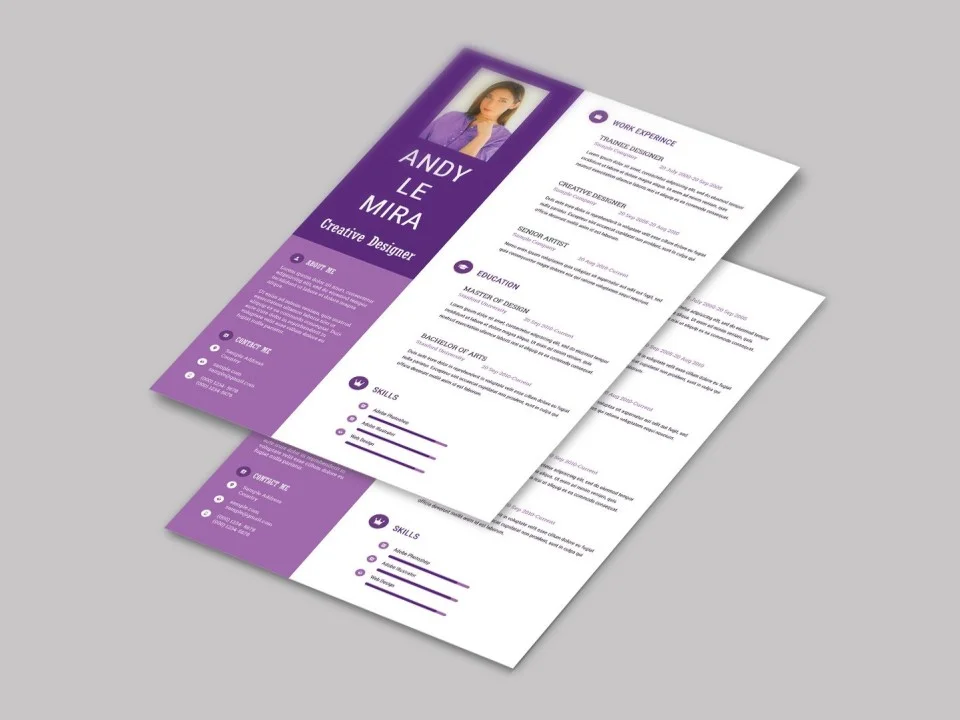
Stefan C. (first published 5 June 2019; subsequently updated). Our Remote Work Jobs Economy, An Evolution of Automation. Linked as a personal pre-COVID perspective, not empirical research. The illustrated preview is from the original article, which credits Buffer for the header artwork.
Australian HR Institute (2025). Hybrid and Flexible Working Practices in Australian Workplaces in 2025. See pp. 4 and 8 for attendance patterns and p. 35 for methodology. The full report gives 30% for three-day attendance in 2025; 32% refers to 2023. The report takes precedence over the inconsistent summary webpage.
Australian Bureau of Statistics (2025). Working arrangements, August 2025, released 12 December 2025. See “Working from home”. This measure is not a fully remote employment rate.
Jobs and Skills Australia (2026). Finding “the One”: Methods and Successful Methods of Recruitment, publicised 26 February 2026. The article uses the 2025 recruitment-method figures on p. 2, not the different figures elsewhere in the report’s successful-method analysis.
Yang, L., and colleagues (2021/2022). The effects of remote work on collaboration among information workers. Nature Human Behaviour, 6, 43–54. Published online 9 September 2021; January 2022 journal issue. DOI: 10.1038/s41562-021-01196-4. Authors’ research summary.
Robert Half (2026). The proximity premium: being near leadership boosts career prospects, released 20 April 2026. Employer-reported survey findings, not measured causal effects on pay or promotions.
Bloom, N., Han, R., and Liang, J. (2024). Hybrid working from home improves retention without damaging performance. Nature, 630, 920–925. DOI: 10.1038/s41586-024-07500-2. Open-access full text. The experiment concerns two home-working days, not a fully remote arrangement.
Rajkumar, K., and colleagues (2022). A causal test of the strength of weak ties. Science, 377, 1304–1310. DOI: 10.1126/science.abl4476. MIT’s account of the research. This study concerns job mobility through LinkedIn connections, not office attendance.
Thanks for reading. About reader stats
Get in touch ↗


Join the conversation
No account needed. Keep comments thoughtful and respectful. Your first comment is held for approval.
View earlier GitHub discussions ↗