The Psychology of Productive Job Searching: Care Deeply, Detach Wisely
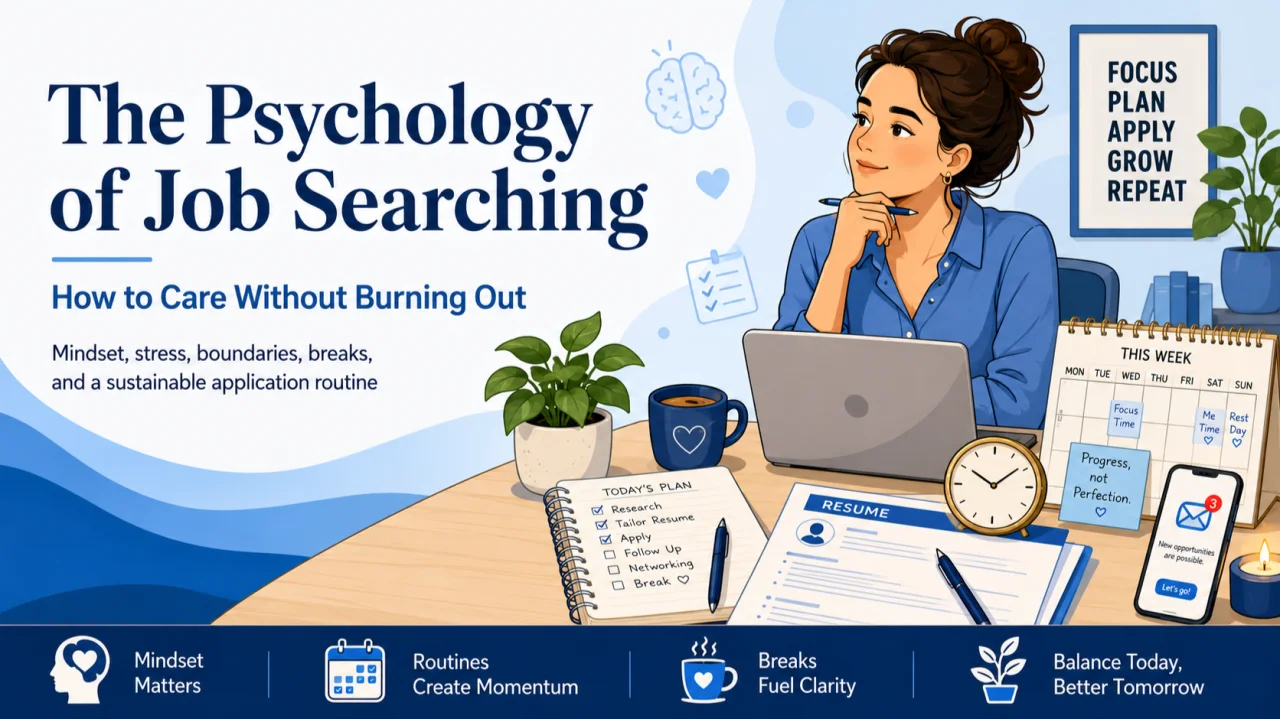
How Much Should You Care During a Job Search?
Job searching is one of the strangest psychological games adults are expected to play.
You are asked to be confident, but not desperate. Persistent, but not needy. Selective, but not too picky. Optimistic, but realistic. Detached, but still motivated enough to write tailored applications, network, interview, follow up and absorb CONSTANT - increasingly years long string of rejections without letting it crush determined job applicants.
So the question is not: “Should I care?”
Of course you should care.
The better question is: how much should you care before caring starts to hurt your search?
Caring is useful — until it becomes identity-level hindering pressure
A healthy amount of care gives your job search energy.
It helps you:
- Tailor your resume properly (use AI based on the job description and your background)
- Write better cover letters (use AI based on the job description and your background)
- Prepare for interviews (use AI for mock interviews and tips based job description)
- Follow up professionally (use AI for writing better polished emails)
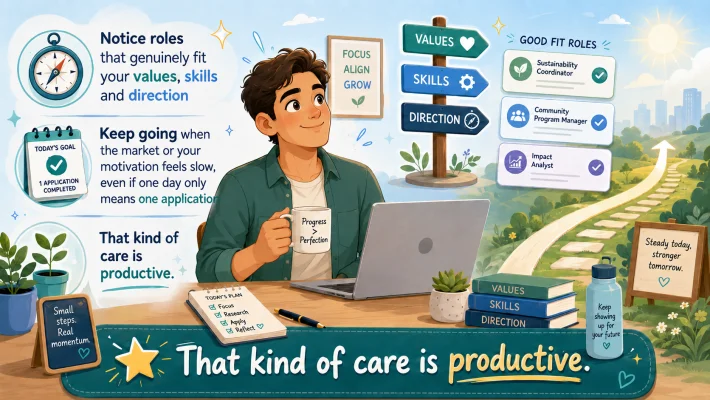
- Notice roles that genuinely fit your values, skills and direction
- Keep going when the market or your motivation feels slow, even if one day only means one application
That kind of care is productive.
But caring too much can become detrimental when every application starts feeling like a referendum on your worth.
That is when a job search becomes emotionally dangerous.
You stop thinking clearly. You over-refresh your inbox. You interpret silence as rejection. You apply for roles you do not even want. You rewrite your resume for the 18th time instead of sending it. You start attaching your self-esteem to hiring systems that are often slow, imperfect, automated, overloaded or simply opaque.
At that point, the problem is not lack of effort.
It is over-identification.
A job search is not a vote on your value
One of the hardest things to accept is that hiring outcomes are not always proportional to merit.
- You can be qualified and still not be shortlisted.
- You can interview well and still lose to another cheaper, internal, charismatic and/or more professionally pronounced candidate.
- You can apply early and still never hear back.
You can be a strong applicant and still be rejected because of timing, budget changes, keyword filters, salary alignment, location preferences, organisational politics, or because another candidate was simply a closer match on paper.
- This does not mean you should become cynical.
- It means you should protect your psychology.
A job search works best when you care about the process, but detach from any single outcome.
The best mindset: disciplined, not desperate
The healthiest job search mindset is not “I do not care.”
It is:
“I care enough to do this properly, but not so much that one rejection ruins my week.”
That means treating job searching like a professional operating rhythm, not an emotional emergency.
You show up. You make good decisions. You apply with intent. You track your activity. You learn from feedback. You network consistently. Then you step away and live your life.
This is especially important if you are actively looking while under financial stress, career uncertainty, redundancy pressure, burnout, or after a difficult work experience. In those situations, it is easy for the search to become all-consuming.
But desperation rarely improves applications. It usually makes them more scattered.
When caring too much becomes detrimental
You may be caring too much if:
- You check your email constantly after applying
- You feel emotionally crushed by every rejection
- You apply for jobs you know are poor fits just to feel productive
- You spend hours perfecting one application but never submit it
- You compare yourself obsessively to others on LinkedIn
- You interpret recruiter silence as personal failure
- You cannot rest without feeling guilty
- Your search becomes your entire identity
The irony is that caring too much can reduce the quality of your search.
You become reactive rather than strategic. You chase every role instead of prioritising good fits. You burn out before interviews arrive. You communicate anxiety instead of confidence. You lose the calm judgement needed to evaluate whether an employer is right for you too.
How many breaks should job seekers take?
Breaks are not laziness. They are part of the system.
For most job seekers, I would recommend:
Daily micro-breaks: After 60–90 minutes of focused job search work, take 10–15 minutes away from the screen.
A daily shutdown point: Set a time when you stop checking job boards, inboxes and application portals. Your brain needs a clear end to the workday.
One lighter day per week: Use this day for low-pressure tasks like networking, reading, light research, or simply stepping back.
One proper rest day per week: No applications. No job boards. No resume edits. No guilt.
If you are unemployed or urgently searching, it can feel counterintuitive to rest. But a tired, anxious brain does not produce better applications. It produces rushed ones, repetitive ones, or overworked ones.
The goal is consistency, not panic.
A recommended weekly job application schedule
A strong job search does not need to be chaotic. It needs structure.
Here is a practical schedule:
Monday: Strategy and role selection
Review new job listings. Shortlist roles into three categories:
- Strong fit
- Possible fit
- Poor fit or desperation fit
Focus mainly on strong-fit roles. These are the roles where your experience, motivation and evidence are easiest to communicate.
Aim to identify 5–8 quality opportunities, not 40 random ones.
Tuesday: Tailored applications
Prepare and submit 2–3 strong applications.
This might include:
- Tailoring your resume headline and summary
- Adjusting key skills to match the role
- Writing a focused cover letter
- Addressing selection criteria
- Checking the organisation and hiring context
Quality matters. But perfectionism is the enemy. A submitted 85% application is better than a perfect draft that never leaves your laptop.
Wednesday: Networking and visibility
Use LinkedIn intentionally.
For someone with a large network, this is especially powerful. If you have 8,000+ connections, your network is not just a contact list, it is a distribution channel.
Post thoughtful content about your field. Comment on relevant industry discussions. Message people respectfully. Reconnect with former colleagues. Ask about teams, not just vacancies.
A useful networking message is not:
“Do you have a job for me?”
It is closer to:
“I noticed your team works in this space. I’m exploring roles around cloud, platforms and digital delivery, and would value your perspective on what skills are most useful in your environment.”
That opens a conversation rather than creating pressure.
Thursday: More applications and follow-ups
Submit another 2–3 applications.
Follow up on roles where appropriate, especially if you have a recruiter contact or internal connection.
Also review your job tracker:
- Role title
- Organisation
- Date applied
- Close date
- Contact person
- Status
- Next action
This reduces anxiety because your search becomes visible and manageable.
Friday: Interview preparation and improvement
Even if you do not have interviews booked, prepare as though you will.
Build examples for common questions:
- Tell me about yourself
- Why this role?
- Describe a difficult technical problem
- How do you manage stakeholders?
- What is your approach to security, risk or delivery?
- Tell us about a time you improved a system or process
Also review what worked during the week. Which applications felt strong? Which roles were a poor fit? What patterns are emerging?
Saturday: Optional light networking or learning
Keep this light.
Attend an event, watch a webinar, improve a portfolio, update LinkedIn, start or improve a personal project, contribute to open source or learn something relevant. This should feel career-supportive, not draining.
If you liked this read, please consider following Resuleet - Helping Job Seekers create and improve their resumes and cover letters as well as hiring tips.
What's Life Like on $70K a Year in Australia? | Resuleet (view original embed)
Sunday: Proper break
No job search (if no deadlines, however this day is common to have job deadlines from Government).
Rest is not separate from the search. It is what allows the search to continue.
How many jobs should you apply for each week?
For most experienced professionals, I would rather see 6–10 thoughtful applications per week than 50 generic ones.
If the market is narrow or specialised, even 3–5 high-quality applications may be enough.
If the roles are simpler or highly standardised, a higher volume may make sense. But for professional, technical, government, cloud, engineering, product, data, cyber or leadership roles, tailoring usually matters.
A good rule is:
Apply widely enough to create opportunity, but selectively enough to preserve quality and your mental health and energy for more suitable roles and companies.
Train your AI of choice to find relevant jobs based on your resume, LinkedIn resume and feeding it job titles. I use ChatGPT Plus/Pro for this and it can scrape relevant jobs into a table with daily deadlines. E.g. Prompt: Find me relevant jobs ending today.
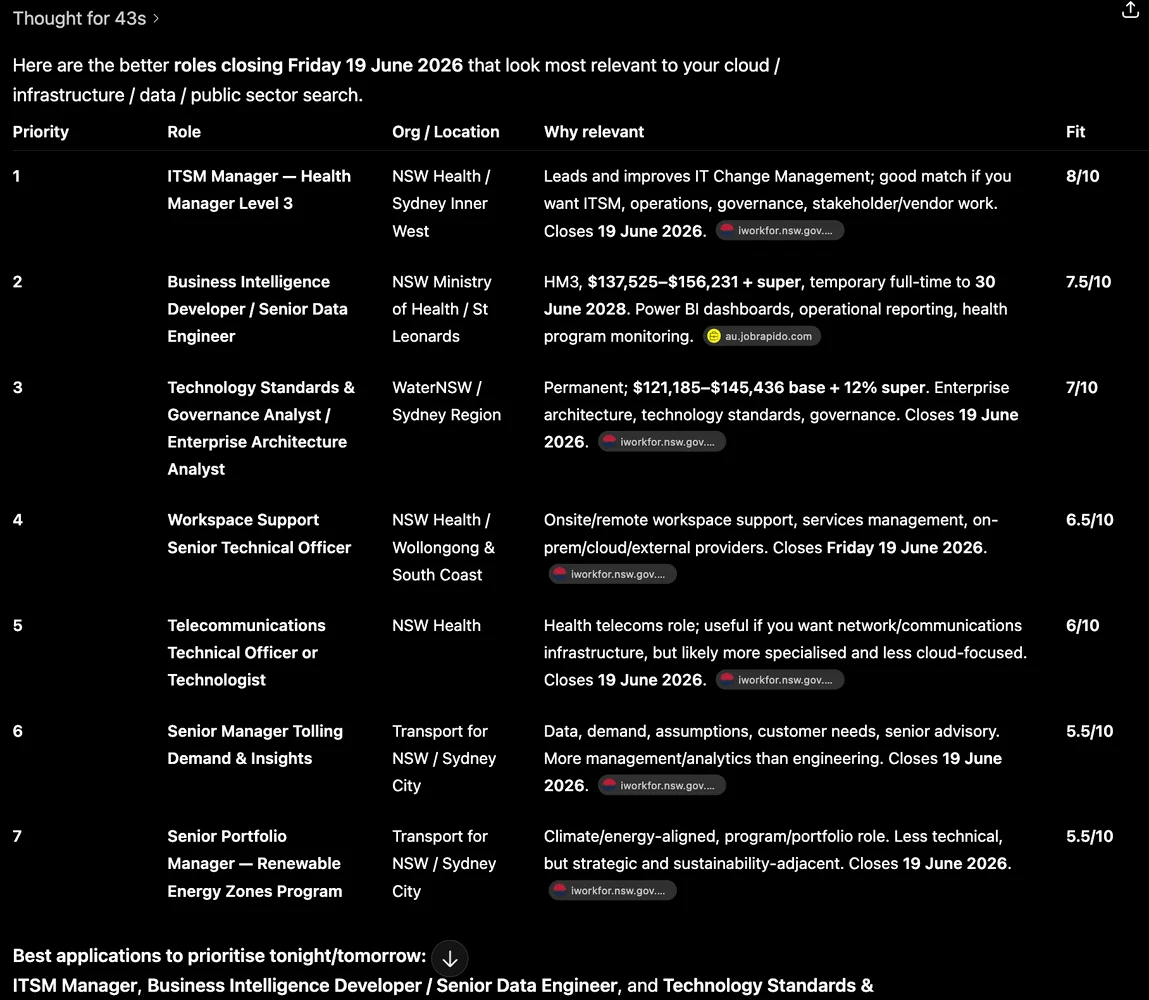
ChatGPT Pro 5.5 on medium can create these results from simple "What roles close today" prompts
The emotional rule: Never give one employer or job application too much power / time
It is fine to be excited about a role.
But never let one role or company become “the one” before you have an offer.
A good rule of thumb is to allow a job application max 20-30 min in this age of AI, it shouldn't take up any more time than that, if it does, make it for exceptional roles you really feel hits all the right spots, even then, 30 minutes should be ample time to apply with the right workflow setup.
- Until there is a signed contract, it is an opportunity, not a life plan.
- Keep applying while interviewing. Keep networking while waiting. Keep your routine while hoping.
This protects you from the emotional crash that happens when you mentally move into a job before the employer has made a decision.
Automating Your Job Search and Application Process
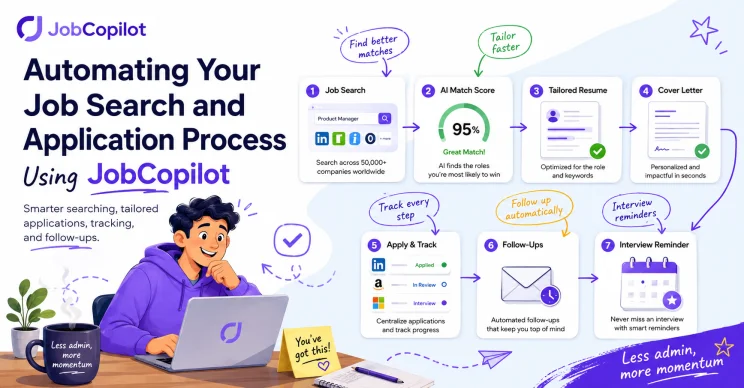
If you want more automated insights and even applications (although I do not recommend auto-applying at this very moment).
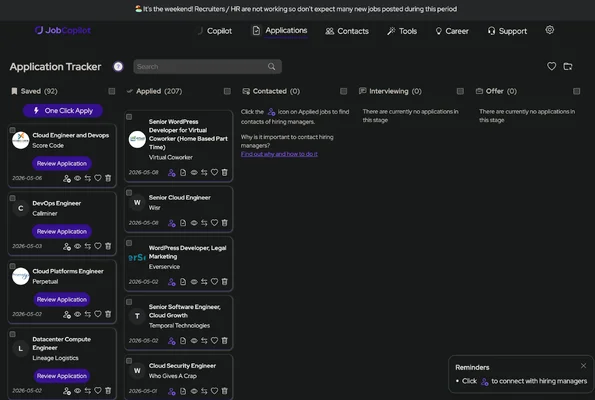
So far I have managed to find an affordable AUD $12.90-18.90 per week (depending on plan - shown below) AI Agent at JobCopilot (A Singaporean based AI SaaS) that can auto-scan for relevant jobs and even auto-apply if you allow it. I recommend not auto-applying unless you really do not care about the jobs it is applying to - but that is difficult to know.
Sometimes not all fields are included vs the native job application on the official ATS of choice or the company's career's page. The AI written copy never seems as good as what native ChatGPT or Claude can output. Some roles are also listed as "Remote, US only" but they will still show up in my selection filter by putting "remote".
You can sign-up here.
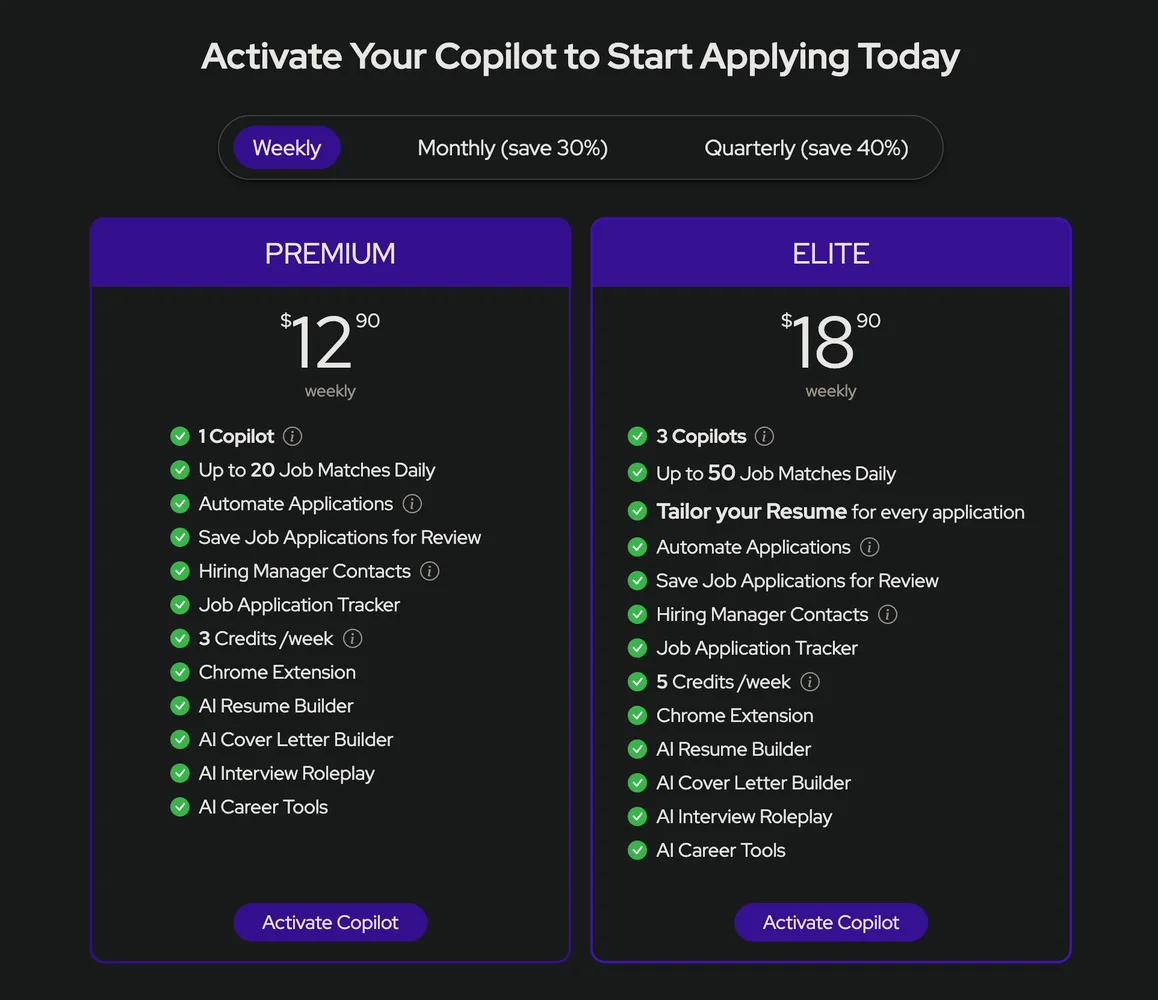
I am not affiliated with the company, just merely found it the most affordable job searching and applying AI agent. I suspect this is where ultimately job applications will be heading any way, including LinkedIn, these other AI job auto-applier companies are just the early adopter type SaaS companies taking this approach first.
I paid for 2 weeks so far (spaced months apart), one week I had auto-applier one and one week I didn't. I did not get any interviews from it, maybe a few email replies from Recruiters but nothing of substance enough. I have preferred to target more local roles instead which it can also find.
There are also a myriad of free auto-appliers on GitHub repos, however use at your own risk as many could violate ToS of job listing websites, some do try to implement rate limiters though. I have not had one successfully working in the past and they are all different, requiring different setup configurations but more or less with similar steps involved like configuring an .md file.
Final thought
A successful job search requires care, but not obsession.
Care about your inputs:
- The quality of your applications
- The clarity of your story
- The strength of your examples
- The relevance of your networking
- The consistency of your schedule
- The way you look after yourself
Detach from what you cannot fully control:
- Recruiter silence
- Internal candidates
- Delayed approvals
- Imperfect screening systems
- Market conditions
- Timing
The best job seekers are not the ones who care the most intensely.
They are the ones who care sustainably.
They build a rhythm. They keep their standards. They take breaks. They learn. They stay visible. They keep going without letting the process consume their identity.
Because the goal is not just to get a job.
The goal is to arrive at the next opportunity with your confidence, judgement and wellbeing still intact.
Disclaimer: Mostly (80%) written by ChatGPT Pro 5.5 on medium level using an idea that came to mind about the need for inner balance and not to take life too heavily even when under the pump. Stress is the number one silent passive killer. Take care.
Best regards,
Stefan C.
Web Operations Engineer and Startups Founder, Resuleet
Sydney, Australia
Thanks for reading.
View the original discussion on LinkedIn ↗


Join the conversation
Comments and reactions use GitHub. Sign in to join in, and keep the discussion thoughtful and respectful.
View discussions on GitHub ↗